News / Features / New Shows + Transfers
Top Reasons to See The Unlikely Pilgrimage of Harold Fry at the Theatre Royal Haymarket
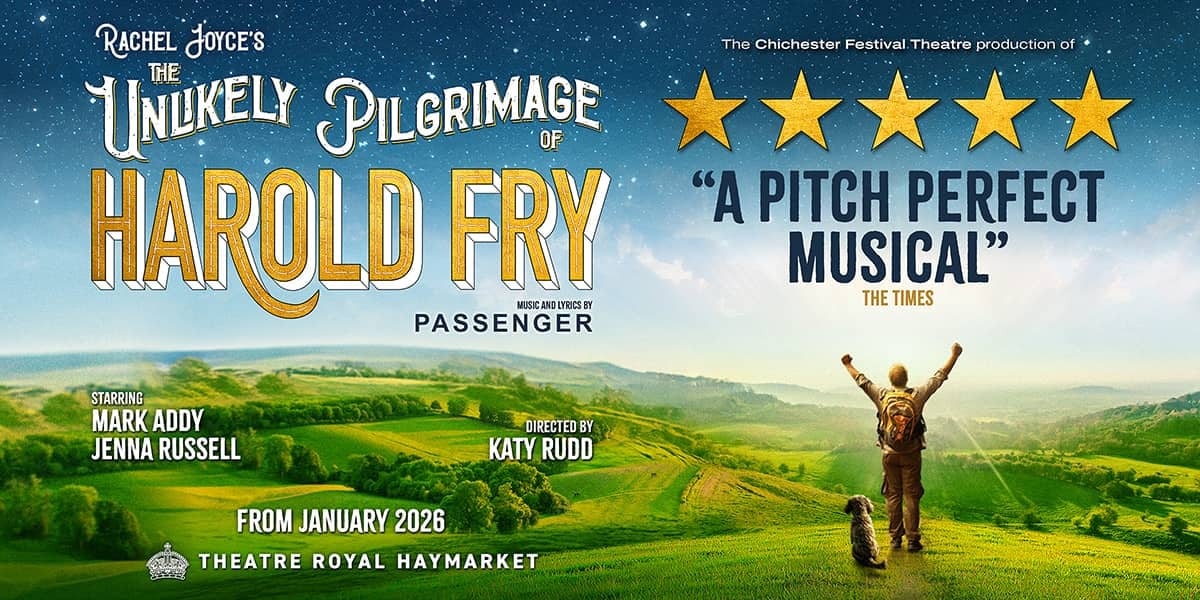
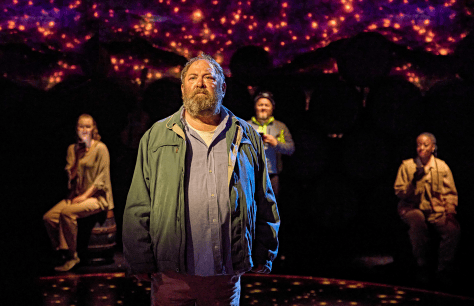
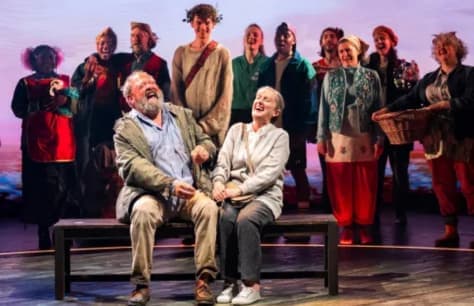
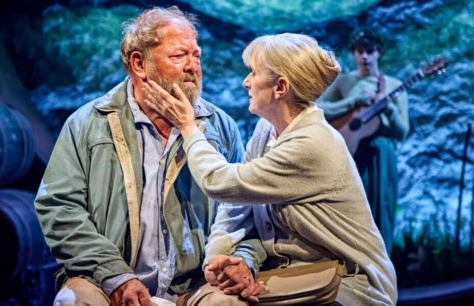
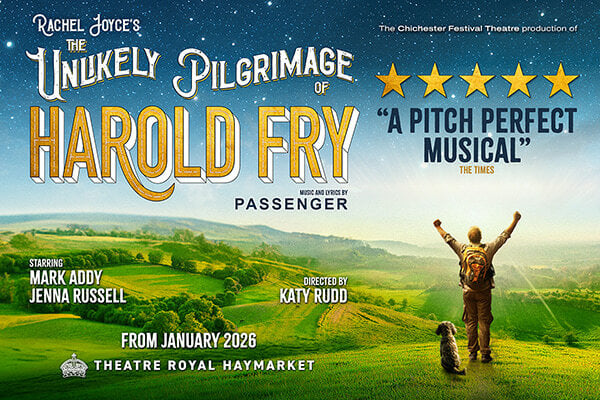
If you’re not familiar with the story, The Unlikely Pilgrimage of Harold Fry begins with a simple act. Harold, an ordinary man living a quiet, routine life, receives a letter from a former colleague he hasn’t seen in years. She’s dying, and writing to say goodbye. He pens a (rather taciturn) reply, sets off to post it… and just keeps walking. What follows is a journey from Devon to Berwick-upon-Tweed that becomes far more than he ever intended. Playing until Sat 18 April at the Theatre Royal Haymarket here are our top reasons not to miss it. First up is how refreshingly different it feels from a lot of what’s currently in the West End. There’s something very understated about the whole piece; it’s not trying to dazzle or show off, and that works in its favour. It feels genuinely wholesome, but not in a cloyingly twee or overly sentimental way, more in the sense that it’s sincere and grounded. That also extends to the music by Passenger. If you’re expecting a gentle, folky score throughout, it actually goes further than that. Alongside the quieter moments, there are some unexpectedly powerful ballads that really land, those proper goosebump moments that catch you off guard and let the brilliant Jenna Russell (who has played Fantine in Les Miserables and the Baker’s Wife in Into The Woods) really flex those vocal chords. Casting is obviously a big draw. Mark Addy leads as Harold, and there’s something special about seeing such a familiar screen actor in this kind of role. Known for the gruff and disillusioned Robert Baratheon in Game of Thrones along with his role in The Full Monty, he brings a grounded, unshowy quality to a character who doesn’t always have the words to explain himself in Harold Fry. That idea; of not having the words, is a big part of what makes the show interesting. At its core, it’s about male inarticulacy: a man who can’t quite express what he feels, and various relationships shaped by years of things left unsaid. Instead of big, declarative moments, the story lets actions do the talking. Harold’s walk becomes a way of processing everything he hasn’t been able to say out loud, which is an unusual focus for a musical, but it works. Another reason to see it is Jenna Russell’s performance, which brings far more depth to Harold’s wife Maureen than you might expect at first. While Harold is off on his journey, it would be easy for her to feel like the character left behind, but instead, the show gives her a story of her own. What begins as a sense of confusion and rejection (why is my husband leaving me to traipse the length of the country to see a dying, female ex-colleague?!) gradually shifts into something more reflective. Through memories of how she and Harold first met and fell in love, you start to understand the life they’ve built, and what’s been lost along the way.
19 Mar, 2026 | By Hay Brunsdon